
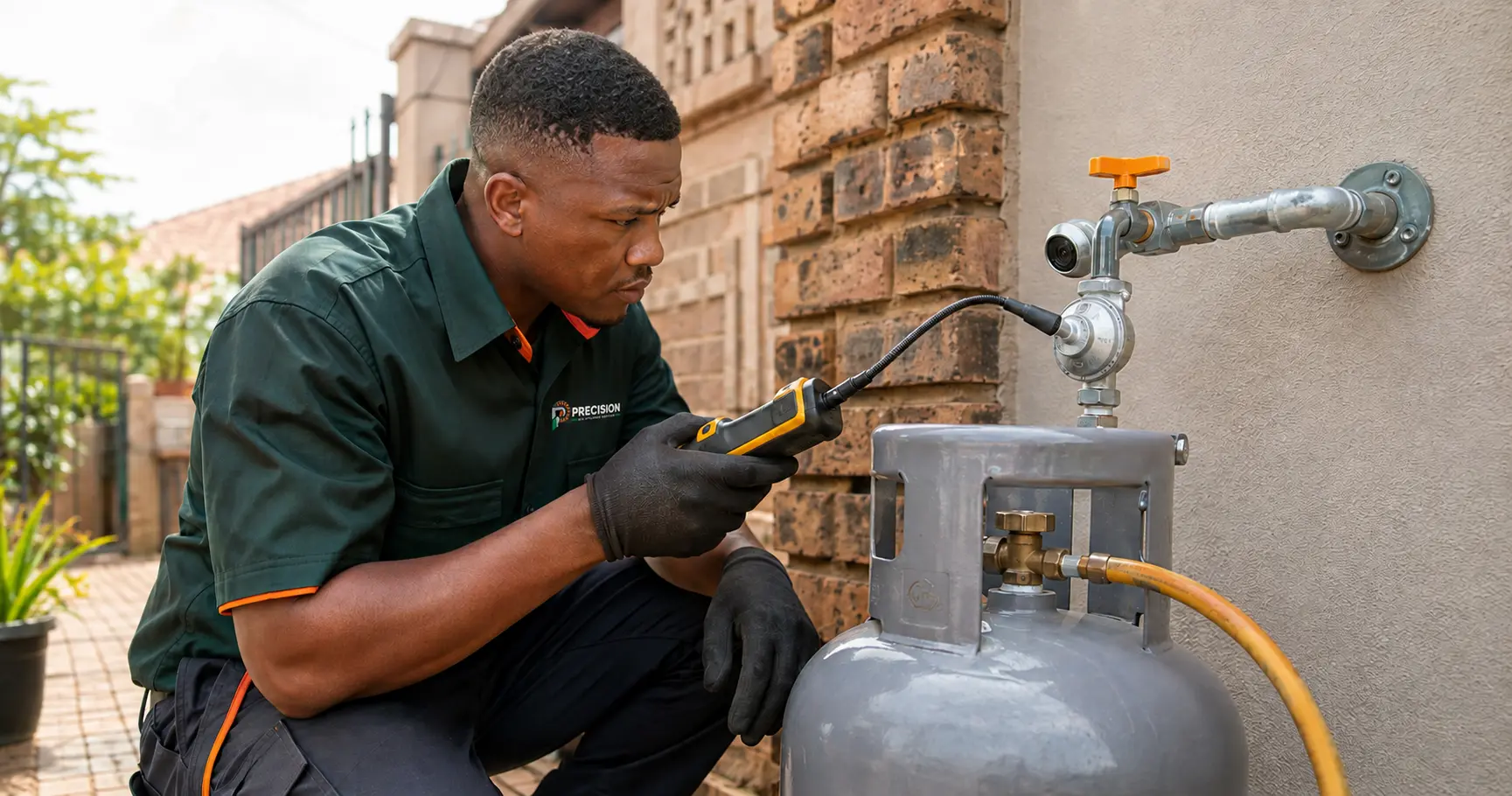
Warning signs that need attention
- A strong or persistent gas smell.
- Soot, scorching or a flame that has changed noticeably.
- Repeated ignition failure followed by a gas odour.
- Damaged, loose or corroded visible connections.
- A geyser or fireplace that repeatedly shuts down.
- Headache, dizziness or nausea near a fuel-burning appliance.
Immediate steps when gas is suspected
- Do not light matches, smoke or create any flame.
- Do not operate electrical switches, plugs or devices in the affected area.
- Close the appliance or cylinder supply only if it can be done without entering danger.
- Open doors or windows only where it is safe to do so.
- Move people outside and away from the suspected source.
- Contact local emergency services or a suitably registered gas practitioner from a safe location.
Do not rely on an email, web form or WhatsApp reply during an emergency. If anyone has symptoms or the smell is strong, prioritise evacuation and emergency help.
After the immediate risk is controlled
Do not put the appliance back into service until the cause has been identified and the unit is considered safe to operate. Share the model, installation location and a factual description of what happened. Avoid dismantling gas controls or bypassing safety devices.
Good everyday habits
- Follow the appliance manufacturer’s operating and maintenance instructions.
- Keep burner areas clean without enlarging jets or altering components.
- Do not block ventilation or flue terminals.
- Keep combustible materials away from fireplaces, ovens and heaters.
- Arrange assessment when ignition, flame or operating behaviour changes.