
Useful checks an owner can make
Start with the manufacturer’s instructions. Without dismantling the appliance, you can record the model, observe when the fault occurs, check whether other appliances are affected and look for obvious dirt, damage or blocked external ventilation.
Information that improves a service booking
- Appliance type, brand and exact model number.
- Age if known, and whether it has been moved or modified.
- What happens during ignition and normal operation.
- Whether the fault affects every burner, every hot-water outlet or only one point.
- Any display code, unusual sound, soot or odour.
- Clear photos taken only when the situation is safe.
Work to leave to a suitably competent practitioner
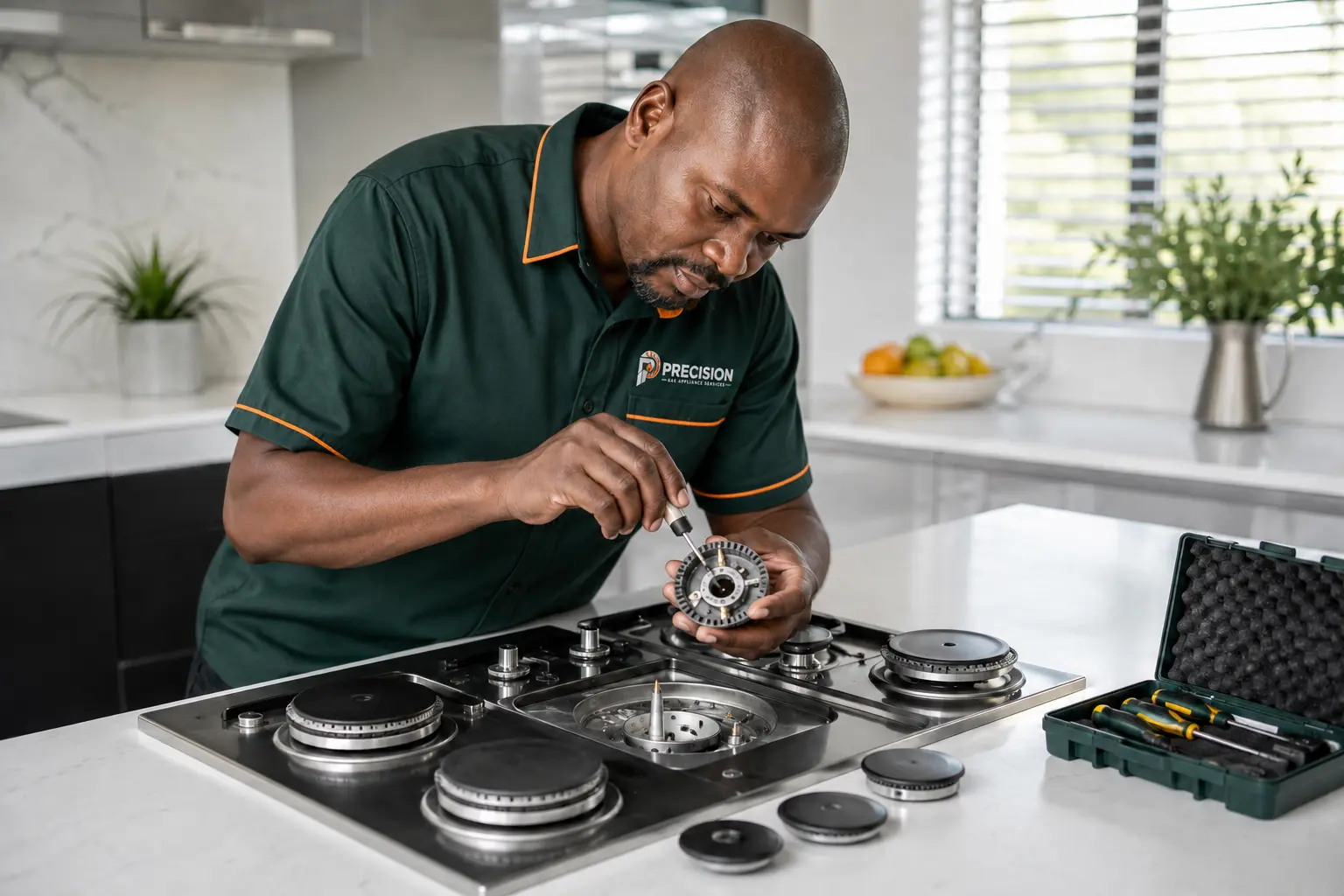
Gas valves, regulators, jets, flame-supervision devices, supply connections, flues and combustion-related components are not casual DIY items. Do not drill blocked jets, bypass sensors, alter regulators or test for leaks with a flame.
When preventive servicing is useful
Arrange an assessment before a heavy-use season, after long inactivity, when several appliances need one planned visit, or as soon as ignition and flame performance begins to change. Preventive work is most valuable when it produces a clear record of findings and next actions.
Repair or replacement?
The decision depends on safety, part availability, appliance condition, age and the cost of restoring reliable operation. A diagnosis should come before a replacement recommendation wherever practical.